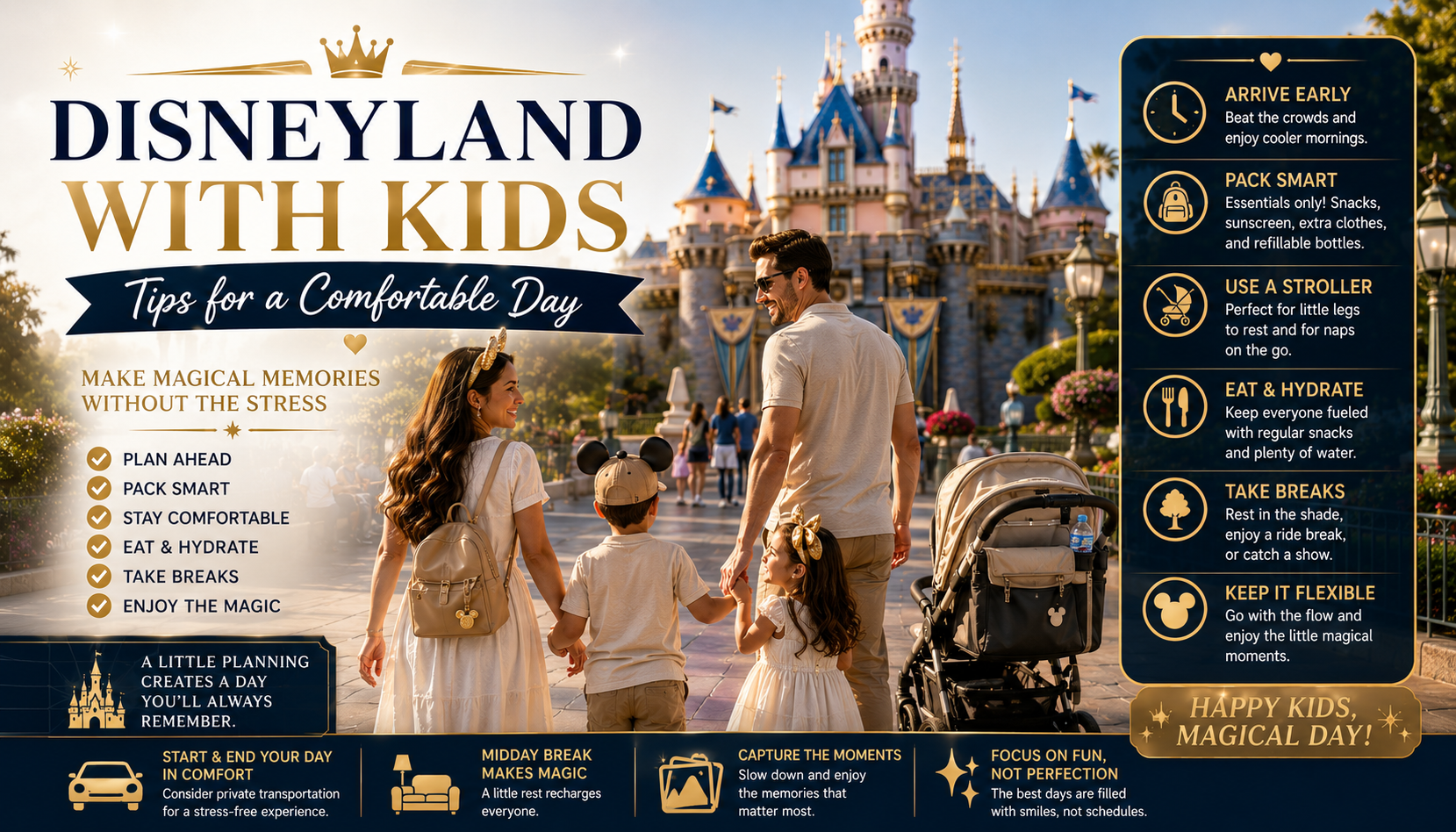
Disneyland With Kids Tips for a Comfortable Day
Disneyland With Kids: Tips for a Smooth, Comfortable Day
A great Disneyland day with kids rarely comes down to how many rides you fit in. More often, it depends on how well you manage the moments in between.
The morning starts with excitement, but it can quickly become stressful. Someone forgot a jacket, another child is already hungry, the stroller is overloaded, and the walk from parking feels longer than expected. That's why the best Disneyland family experiences begin before you ever enter the gates.
If you're planning a Disneyland visit with children, comfort should be part of the strategy. A child who is tired, thirsty, overwhelmed, or overstimulated won't care how carefully you've planned your ride schedule. The families who enjoy Disneyland the most are usually the ones who arrive relaxed, move at a comfortable pace, and leave room for flexibility throughout the day.
Start With a Smooth Arrival
Your Disneyland experience begins long before the first attraction.
Transportation, parking, security checkpoints, ticket scanning, and the walk to the entrance all require time and energy. Families often underestimate how much these early logistics affect the rest of the day.
For families staying in Los Angeles or arriving through LAX, private transportation can make the experience noticeably easier. Instead of managing parking structures, tram lines, and exhausted children at the end of the night, you arrive with a clear plan and a comfortable ride waiting when you're ready to leave.
Timing matters just as much. Early arrival typically means cooler temperatures, shorter lines, and happier kids. However, "early" doesn't have to mean exhausting your family before the day even begins. If waking up before sunrise guarantees a cranky morning, a slightly later arrival with rested children may be the smarter choice.
For families with toddlers and preschoolers, build extra time into everything. Security lines, bathroom breaks, snack requests, and stroller adjustments always take longer than expected.
Dress for Comfort, Not Just Photos
Disneyland weather can change dramatically throughout the day.
Cool mornings often turn into warm afternoons, especially during spring and summer. Layered clothing gives families the flexibility to adjust without carrying unnecessary items.
Comfortable shoes are essential. Disneyland involves far more walking than most parents anticipate, and uncomfortable footwear can affect everyone's mood before lunchtime.
For younger children, always bring a backup outfit. Water attractions, spilled drinks, and unexpected accidents happen regularly. A spare set of clothes can prevent a minor inconvenience from becoming a major disruption.
At the same time, avoid overpacking. Many parents turn their stroller into a storage locker and spend the day pushing unnecessary weight around the park. Focus on essentials: extra clothing, sunscreen, water, snacks, and a few comfort items.
Consider a Stroller Even If Your Child Doesn't Use One at Home
One of the most common Disneyland questions is whether a stroller is necessary.
For most young children, the answer is yes.
Disneyland covers a surprising amount of ground, and even independent walkers often become tired after hours of excitement, stimulation, and standing in lines.
A stroller provides more than transportation. It creates a place to rest, snack, cool down, and even nap during the busiest part of the day.
For toddlers, a stroller is almost always essential. For preschoolers, it remains highly beneficial. Even older children may appreciate occasional breaks, especially during warmer seasons.
If your child still naps, a stroller can be one of the most valuable tools you bring.
Use Food and Hydration as Part of Your Strategy
Hungry children rarely become more cooperative.
One of the easiest ways to keep the day running smoothly is to stay ahead of hunger and thirst before they become problems.
Start with a solid breakfast. Carry familiar snacks that your children already enjoy. Plan meals before everyone reaches the point of exhaustion.
Theme park food can be part of the fun, but children often do best when they have access to familiar options alongside special treats.
Hydration is equally important. Excitement can make children forget they're thirsty, especially during warmer months. Encourage water breaks throughout the day rather than waiting until someone feels dehydrated.
A seated meal can also serve as a valuable reset. Taking time to sit in air conditioning and recharge often improves the entire second half of the day.
Focus on Fewer Priorities
Many parents feel pressure to experience everything.
The reality is that the most enjoyable Disneyland days are usually the least rushed.
Choose a handful of must-do attractions, character experiences, or shows, and consider everything else a bonus. This approach creates flexibility and allows your family to enjoy the atmosphere rather than constantly racing to the next destination.
Children often remember the small moments more than the headline attractions. A favorite snack, a parade, a character interaction, or simply exploring a themed area can become the highlight of the day.
Protecting your family's mood is usually more valuable than squeezing in one extra ride.
Build Rest Into the Schedule
Every family benefits from intentional downtime.
Whether it's a shaded bench, an indoor attraction, a leisurely lunch, or a quiet walk through a less crowded area, small breaks help prevent overstimulation and fatigue.
Watch for early signs of exhaustion. Some children become louder and more energetic before crashing, while others become quiet, emotional, or clingy.
Addressing those signals early is much easier than recovering from a full meltdown later.
Families staying nearby may even benefit from an afternoon hotel break before returning for evening entertainment. Others prefer to remain in the park and create smaller recovery moments throughout the day.
Either approach can work as long as rest is part of the plan.
Plan Your Evening Before You're Tired
The final hours of a Disneyland day can be magical—or exhausting.
Fireworks, nighttime entertainment, and illuminated attractions create unforgettable memories, but they also bring larger crowds and increased fatigue.
Decide in advance what matters most to your family.
If fireworks are a priority, save energy for them. If younger children typically fade before nighttime entertainment begins, consider leaving earlier rather than pushing everyone past their limit.
There's nothing relaxing about carrying an exhausted child through crowded exits while searching for transportation after a long day.
Knowing exactly how you'll return to your hotel, airport, or next destination creates a much smoother ending to the experience.
What a Comfortable Disneyland Day Really Looks Like
The best Disneyland family memories often come from a day that feels simple.
You arrive without rushing. The kids stay fed and hydrated. There's a stroller when little legs get tired. Breaks happen before meltdowns. Plans are flexible enough to adapt when energy levels change.
That doesn't happen by accident.
It comes from thoughtful planning centered around comfort rather than pressure.
Disneyland is at its best when families focus less on accomplishing everything and more on enjoying the experience together. When you protect your family's energy, the magic has room to unfold naturally—and those are often the moments everyone remembers most.
1. What is the best way to do Disneyland with young children?
The best approach is to arrive early, prioritize a few key attractions, schedule regular breaks, and focus on your children's energy levels rather than trying to see everything in one day.
2. Should I bring a stroller to Disneyland?
Yes, even for children who do not regularly use a stroller at home. Disneyland involves a significant amount of walking, and a stroller provides a comfortable place for children to rest, snack, or nap throughout the day.
3. What time should families arrive at Disneyland?
Most families benefit from arriving before park opening. Early mornings typically offer shorter wait times, cooler temperatures, and a more relaxed experience before crowds increase.
4. Is private transportation worth it for Disneyland families?
Private transportation can be especially valuable for families with young children, grandparents, strollers, or multiple bags. It eliminates parking hassles, reduces stress, and provides a more comfortable start and end to the day.
5. What should I pack for Disneyland with kids?
Essentials include water bottles, snacks, sunscreen, comfortable clothing, an extra change of clothes for younger children, portable chargers, and any necessary medications. Avoid overpacking to keep your day manageable.
6. How often should children take breaks at Disneyland?
Most children benefit from a short break every few hours. Scheduled downtime helps prevent overstimulation, fatigue, and meltdowns while improving the overall experience.
7. Is Disneyland manageable in one day with children?
Yes, but families should focus on a handful of priority attractions and experiences rather than trying to do everything. A realistic pace leads to a more enjoyable visit.
8. What is the best food strategy for Disneyland with kids?
Feed children before they become hungry. Start with a good breakfast, carry familiar snacks, stay hydrated, and schedule meals before peak dining hours to avoid long lines and cranky moods.
9. Should families stay for Disneyland fireworks?
It depends on your children's energy levels. Fireworks can be a magical experience, but families with younger children may find an earlier departure more comfortable and less stressful.
10. What is the biggest mistake parents make at Disneyland?
Trying to do too much. Overloading the schedule often leads to exhausted children and frustrated parents. A more relaxed pace usually creates the best family memories.