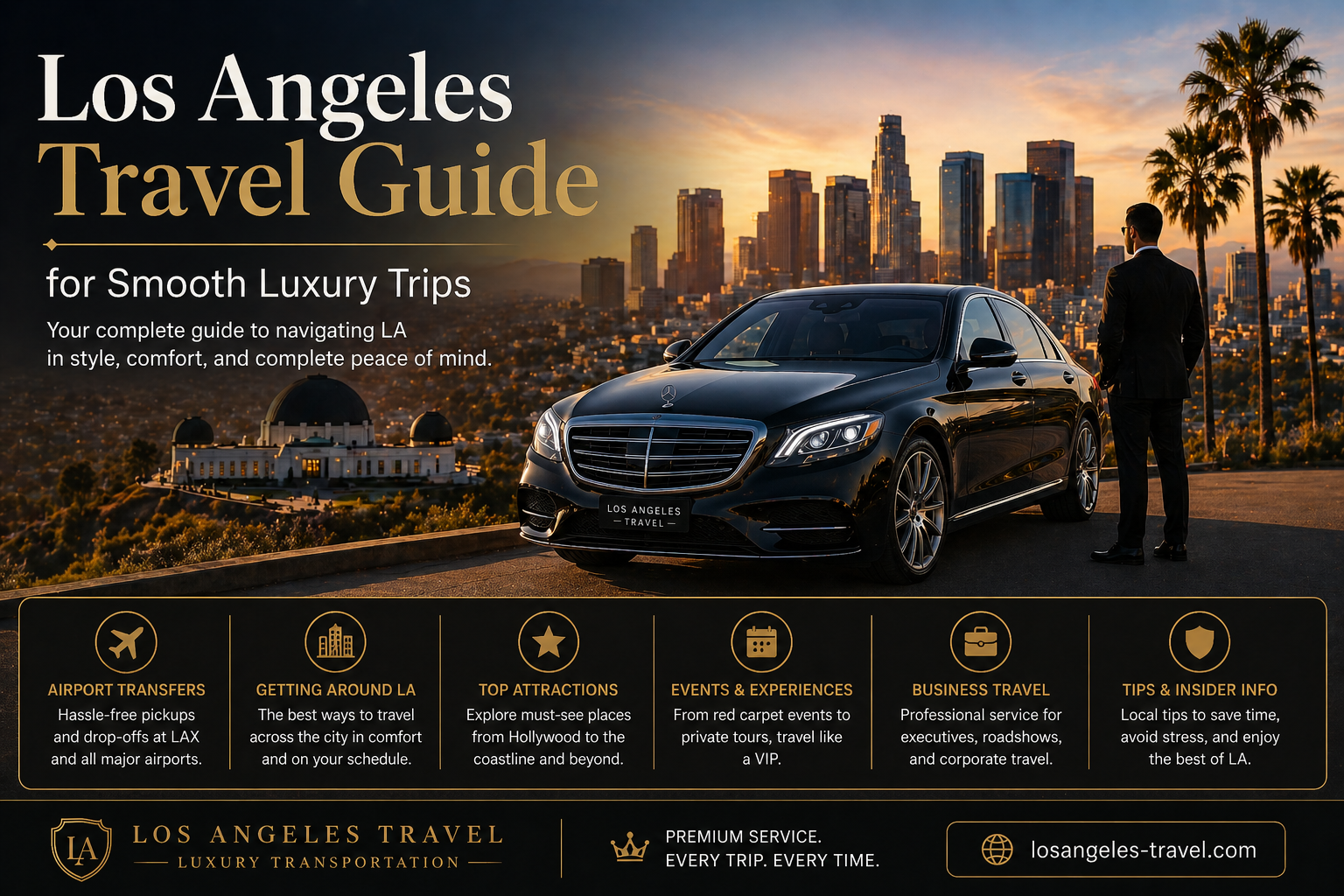
Los Angeles Travel Guide for Smooth Luxury Trips
Landing at LAX after a long flight can make Los Angeles feel less glamorous than expected. Between traffic, terminal confusion, and the size of the region itself, even seasoned travelers can lose time fast. This los angeles travel guide is built for visitors who want the city to feel polished from the moment they arrive - not hectic, improvised, or dependent on luck.
Los Angeles rewards good planning. It is not a city best handled like Manhattan, where you can decide everything block by block, or a resort town where the hotel does most of the work for you. LA is spread across distinct neighborhoods, each with its own rhythm, and the distance between a beach lunch, a Beverly Hills appointment, and a dinner in West Hollywood can be more significant than it looks on a map. If your time matters, how you move through the city matters just as much as where you stay.
A Los Angeles travel guide starts with geography
The first mistake many visitors make is thinking of Los Angeles as one compact destination. In reality, it functions more like a collection of cities connected by freeways, timing, and local knowledge. Santa Monica and Venice offer a coastal mood that feels relaxed and scenic. Beverly Hills, West Hollywood, and Century City are more polished, fashion-forward, and appointment-driven. Downtown brings business, architecture, and an increasingly strong food and arts scene. Malibu feels removed in the best way, while Pasadena and the San Gabriel Valley offer a different pace altogether.
That matters because your hotel should reflect your priorities, not just your wishlist. If your trip centers on shopping, fine dining, and private appointments, staying on the Westside usually makes more sense than booking a room downtown for the view. If you have meetings near Burbank or Pasadena, crossing the city daily can become expensive in both time and energy. A good plan in Los Angeles is rarely about seeing everything. It is about grouping the right experiences together.
Arrival at LAX sets the tone for the whole trip
For international visitors especially, LAX can feel efficient one moment and chaotic the next. Flight delays, customs lines, terminal congestion, and app-based pickup confusion are common. Families with children, wedding guests, executives on a schedule, and travelers carrying premium luggage usually benefit from arranging transportation before they land.
This is one area where luxury service is not just about image. It is about control. A prearranged airport transfer with flight tracking, meet-and-greet service, and a professional chauffeur removes several variables at once. You know who is meeting you, where you are going, and what the vehicle standard will be. That is a different experience from stepping outside and comparing rideshare wait times after an overnight flight.
For some travelers, a sedan is ideal. For others, especially families or small groups, an SUV or Sprinter van is the practical choice. The trade-off is simple: the more luggage, coordination, or schedule sensitivity involved, the more valuable private transportation becomes.
How many days do you really need?
A short stay in Los Angeles can still be rewarding, but expectations need to be realistic. Two to three days is enough for a focused visit built around one or two areas, perhaps Beverly Hills and Santa Monica, or West Hollywood and Malibu. Four to five days gives you room to include dining, shopping, studio-related plans, and a scenic coastal drive without feeling rushed.
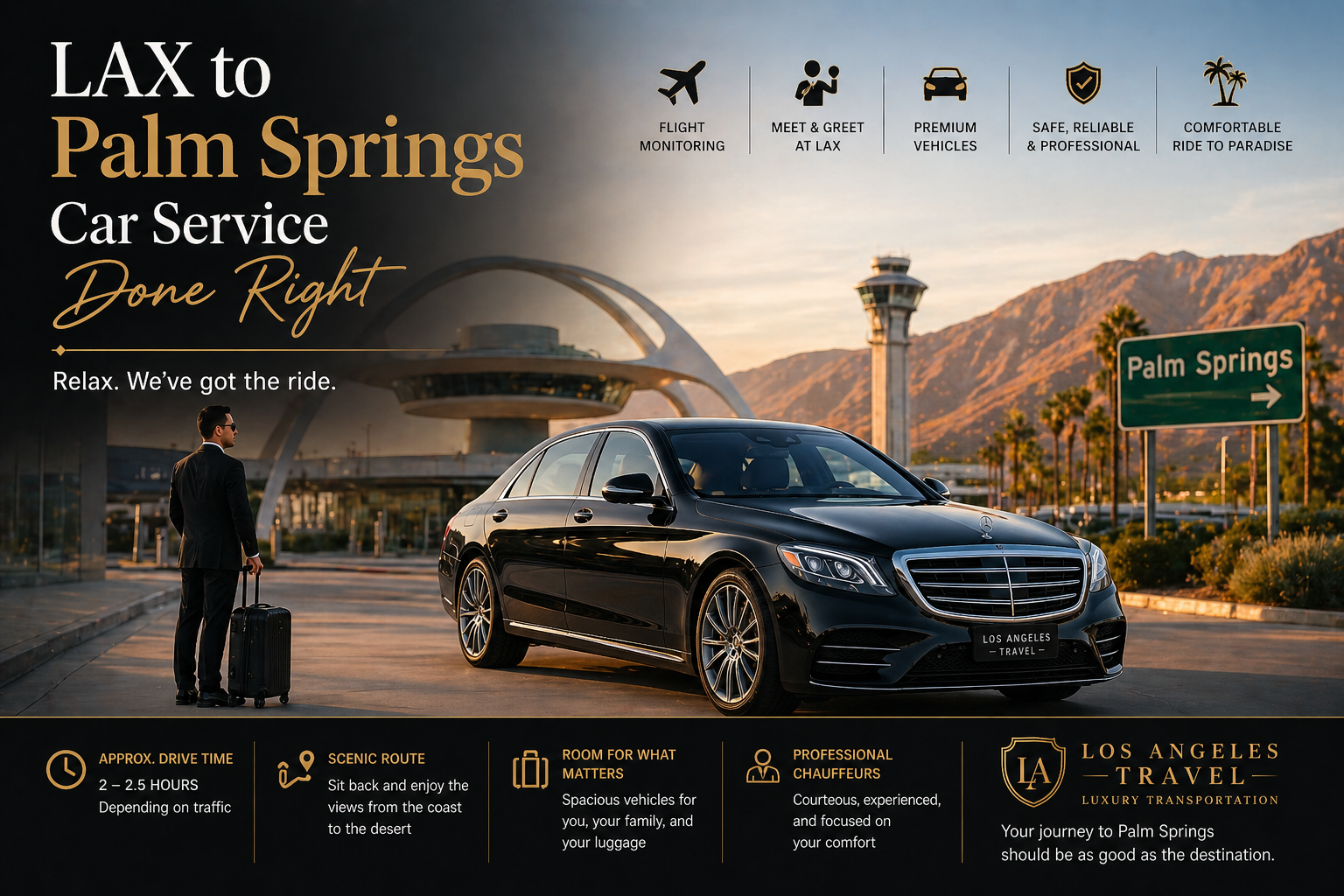
If Southern California is part of the larger itinerary, Los Angeles often works best as a starting point rather than the entire trip. Many visitors arrive through LAX and continue on to Palm Springs, Santa Barbara, San Diego, or even Las Vegas. That kind of routing can be elegant and efficient if transportation is arranged well. It can be exhausting if every leg is left to chance.
The best way to move around LA depends on your priorities
This is where many travel guides oversimplify. There is no single best way to get around Los Angeles. It depends on your tolerance for inconvenience, your schedule, and the level of service you expect.
Rental cars work for travelers who are comfortable driving in dense traffic, navigating parking, and handling logistics themselves. Rideshare services are useful for casual, low-stakes trips when timing is flexible. But if privacy, punctuality, presentation, or group coordination matter, chauffeur service is often the better fit.
That is especially true for airport pickups, weddings, corporate itineraries, multi-stop shopping days, private city tours, and long-distance transfers. A professional chauffeur does more than drive. They reduce uncertainty, help the day stay on schedule, and create a calmer experience between destinations. For international travelers unfamiliar with local routes, that reassurance has real value.
LosAngeles Travel is one example of a service model built around that expectation, with premium vehicles, experienced chauffeurs, and planning support that suits travelers who prefer concierge-level transportation over mass-market options.
What to prioritize in your itinerary
Los Angeles is at its best when your schedule has shape. Trying to see Hollywood, Malibu, Downtown, Disneyland, and Palm Springs in two days is not ambitious - it is inefficient. The smarter approach is to build each day around a zone and a mood.
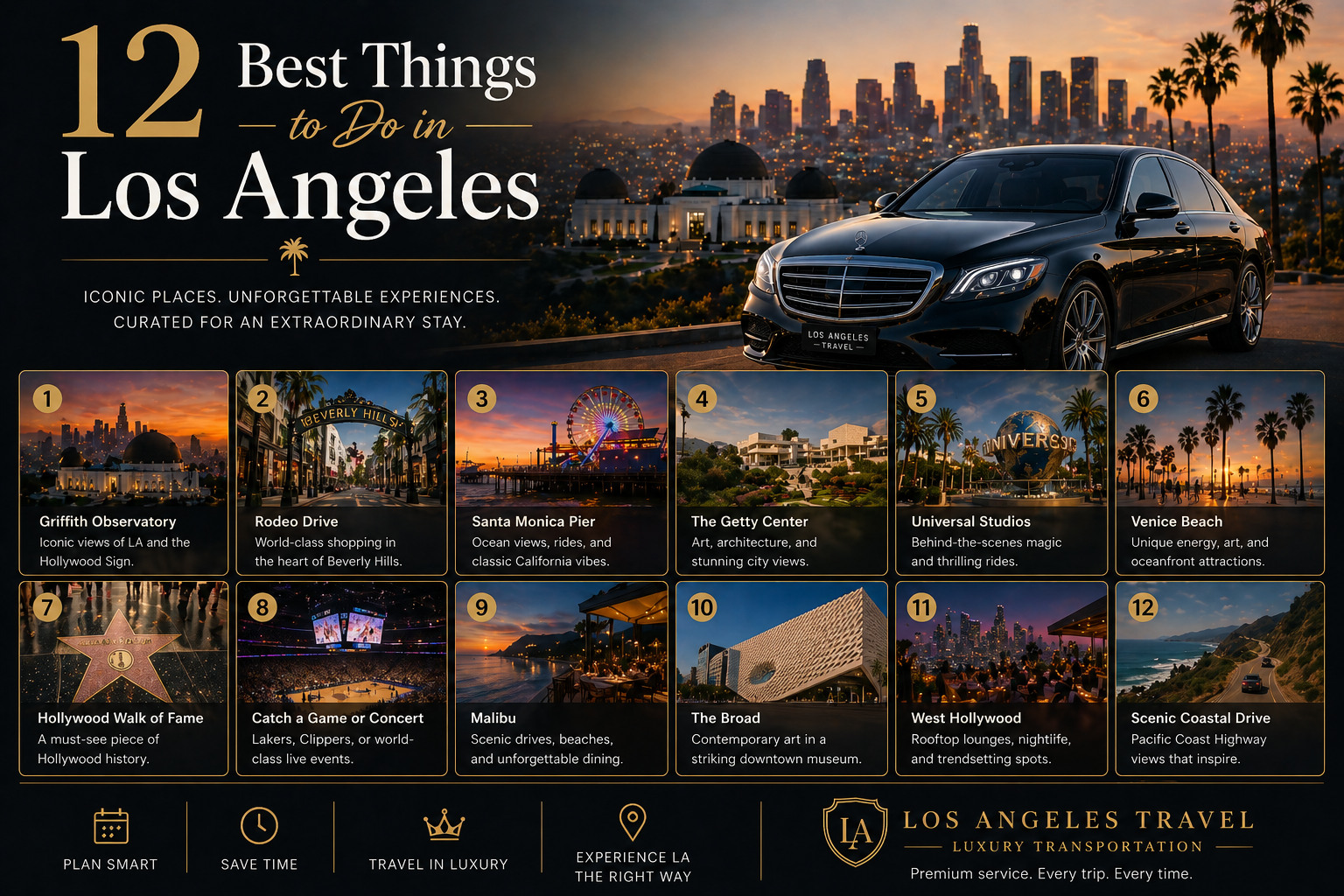
If you want classic LA glamour, combine Beverly Hills, Rodeo Drive, the Sunset Strip, and a refined dinner in West Hollywood. If coastal California is the goal, pair Santa Monica with Malibu and leave room to enjoy the scenery rather than racing through it. If your interest is cultural, Downtown, The Broad area, and nearby dining can anchor a more urban day. Families may structure the visit around attractions and then choose transportation that allows car seats, luggage space, and easier timing.
The same principle applies to business travel. If your visit includes meetings in different parts of the city, padding your schedule is not enough. Reliable ground transportation becomes part of the strategy, not an afterthought.
A practical Los Angeles travel guide for special occasions
Some trips carry more pressure than others. Weddings, milestone birthdays, executive visits, and group arrivals leave little room for transportation mistakes. In those situations, the cheapest option is rarely the most economical in the end.
Wedding transportation, for example, needs timing, staging, and consistency. Corporate group travel requires vehicles that present well and run on schedule. VIP clients often value discretion as much as comfort. A family arriving from overseas may simply want a clean vehicle, a courteous driver, and confidence that the children and luggage will fit without negotiation at the curb.
This is where premium transportation earns its place. The service standard supports the event itself. A polished black car or SUV changes how the day feels. A Sprinter van can keep a group together without sacrificing comfort. The right vehicle is not just a detail - it affects pacing, stress levels, and first impressions.
Day trips from Los Angeles are worth planning in advance
One of LA's strongest advantages is its access to other destinations. Palm Springs offers desert luxury and a cleaner, quieter rhythm. Santa Barbara feels elegant and coastal without the sprawl. San Diego suits travelers who want waterfront scenery and a more relaxed pace. Las Vegas remains a longer transfer, but still a common route for visitors building a larger West Coast itinerary.
The question is not whether these destinations are worthwhile. It is whether you want the transfer to feel like part of the trip or an obstacle between hotel checkouts. For couples, small groups, and premium travelers, private city-to-city transportation often makes more sense than juggling rental returns, regional flights, or multiple app-based rides. It depends on budget, of course, but it also depends on how much you value time, comfort, and continuity.
What luxury travelers notice first
Most high-end travelers are not looking for excess. They are looking for reliability presented well. Clean vehicles, responsive communication, on-time arrivals, and chauffeurs who understand discretion often matter more than flashy add-ons.
That is also why advance booking matters in Los Angeles. The city has too many moving parts to leave every transfer open-ended, especially during peak travel periods, awards-season events, major conventions, or holiday weekends. Booking ahead creates margin. It gives you a plan when the airport is crowded, when traffic builds early, or when your itinerary includes more than one stop.
A good Los Angeles trip should feel composed. You should be able to step off a flight, move through the city comfortably, and arrive where you need to be without negotiating every leg in real time. That is the difference between merely visiting LA and experiencing it well.
If you treat transportation as part of the travel experience rather than a last-minute task, Los Angeles becomes easier, more elegant, and far more enjoyable.